


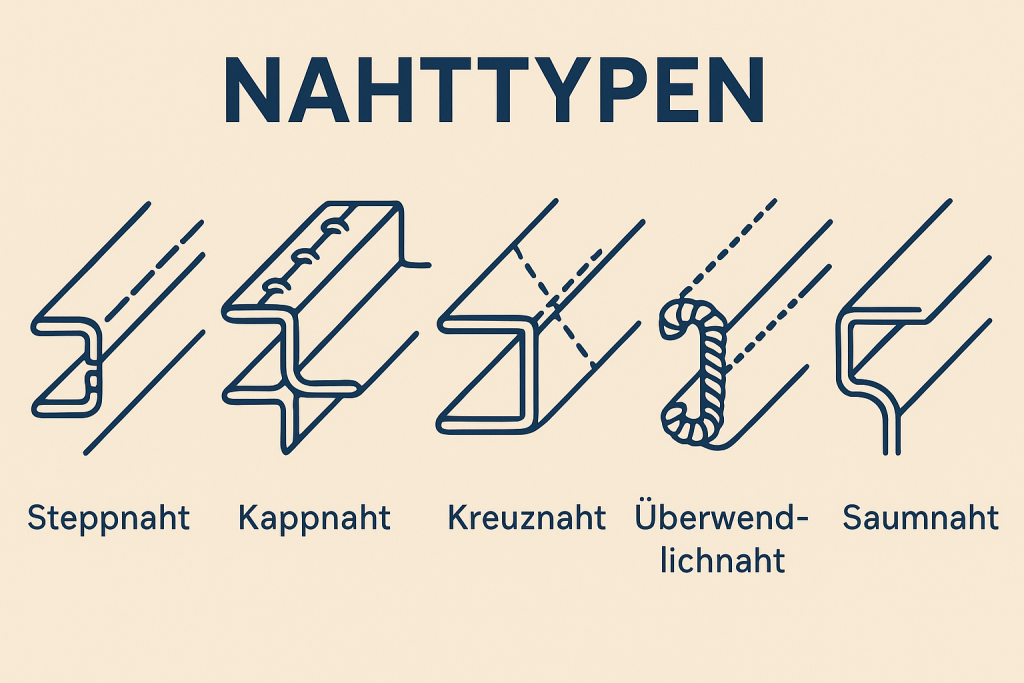
Nahttypen
In the intricate world of sewing, understanding “Nahttypen,” or types of seams, is essential. Seams are more than just stitches that hold fabric together; they are the foundation of any sewn item, impacting its durability, appearance, and functionality. As a sewing enthusiast, I find it fascinating to explore the different Nahttypen, each with its unique characteristics and applications. This exploration not only enhances the quality of my projects but also enriches the creative process.
To embark on this journey, it’s crucial to comprehend the various seam types available. Each seam type serves a specific purpose, whether it’s for strength, flexibility, or decorative appeal. By mastering these types, we can refine our sewing techniques and produce professional-quality garments and crafts. The world of Nahttypen is vast, offering endless possibilities for personal expression and innovation.
In this guide, I will delve into the importance of understanding seam types, provide an overview of different Nahttypen, and explore their characteristics. Additionally, I’ll share insights on selecting the right seam for your project, common mistakes to avoid, essential tools, and techniques for mastering seam types. By the end, you’ll be well-equipped to elevate your sewing skills and create stunning works of art.
Importance of Understanding Seam Types in Sewing
Grasping the significance of seam types is fundamental to successful sewing. Each seam type has distinct properties that influence the structure and appearance of the finished product. Understanding these properties allows us to choose the most suitable seam for a specific fabric or design, ensuring that the final result meets our expectations in both aesthetics and functionality.
Moreover, the right seam can enhance the durability of a garment. For instance, when sewing with delicate fabrics, a French seam provides a clean finish and prevents fraying, prolonging the garment’s life. Conversely, a flat-felled seam is ideal for projects requiring extra strength, such as denim jeans. By selecting the appropriate seam, we not only enhance the garment’s lifespan but also improve the overall quality of our sewing projects.
Furthermore, understanding seam types fosters creativity. Knowledge of various Nahttypen empowers us to experiment with different techniques, combining function with artistry. Whether it’s adding a decorative touch to a simple blouse or creating intricate designs with topstitching, the possibilities are endless. This understanding transforms sewing from a mere craft into a creative expression of individuality and skill.
Overview of Different Nahttypen
There are numerous Nahttypen, each serving distinct purposes and suitable for various fabrics and designs. Below is an overview of some common seam types:
- Plain Seam: The most basic seam, used in almost every sewing project. It’s simple yet effective, joining two pieces of fabric with a straight stitch.
- French Seam: Ideal for lightweight fabrics, this seam encloses the raw edges, creating a neat finish. It’s perfect for delicate materials like chiffon and silk.
- Flat-Felled Seam: Known for its strength and durability, this seam is commonly used in denim and workwear. It provides a clean finish on both sides of the fabric.
- Overlocked Seam: Often used in knit fabrics, this seam prevents fraying and provides elasticity. It’s essential for garments requiring stretch, such as t-shirts.
- Bound Seam: This seam involves binding the raw edges with a separate piece of fabric or tape, offering a decorative and durable finish.
Each of these Nahttypen has its unique benefits and is suited for specific applications. By familiarizing ourselves with these seam types, we can select the best option for our projects, ensuring both functionality and aesthetic appeal.
Characteristics of Each Type of Seam
Understanding the characteristics of each seam type is crucial for selecting the right one for your project. Let’s explore the defining features of some common Nahttypen:
Plain Seam
- Simplicity: The plain seam is straightforward and easy to sew, making it ideal for beginners.
- Versatility: Suitable for a wide range of fabrics and projects, from garments to home décor.
- Basic Structure: Consists of a simple straight stitch, joining two pieces of fabric.
French Seam
- Elegance: Provides a clean, polished finish, especially suitable for sheer and delicate fabrics.
- Enclosed Edges: Encases raw edges, preventing fraying and enhancing garment longevity.
- Perfect for Lightweight Fabrics: Commonly used in garments like blouses and lingerie.
Flat-Felled Seam
- Durability: Offers exceptional strength, making it ideal for heavy-duty fabrics.
- Professional Finish: Both sides of the fabric have a neat, finished appearance.
- Common in Casual Wear: Widely used in jeans, shirts, and sportswear.
Overlocked Seam
- Elasticity: Provides stretch and flexibility, essential for knit and stretchy fabrics.
- Fray Prevention: Effectively prevents fraying, prolonging the garment’s life.
- Quick and Efficient: Ideal for mass production and quick sewing projects.
Bound Seam
- Decorative Appeal: Adds a touch of style with contrasting or matching binding.
- Edge Protection: Covers raw edges, protecting them from wear and tear.
- Versatile Use: Suitable for both decorative and functional purposes.
How to Choose the Right Seam for Your Project
Selecting the right seam type is crucial for the success of any sewing project. Consider the following factors when choosing a Nahttyp:
Fabric Type
- Lightweight Fabrics: Opt for French seams to prevent fraying and provide a smooth finish.
- Heavy Fabrics: Use flat-felled seams for added strength and durability.
- Knit Fabrics: Choose overlocked seams for elasticity and flexibility.
Project Type
- Garments: Consider the garment’s purpose and select a seam that complements its design and function.
- Home Décor: For items like curtains and cushions, choose seams that offer both durability and aesthetic appeal.
Desired Finish
- Clean and Polished: Use French seams for a refined appearance.
- Casual and Sturdy: Opt for flat-felled seams for a rugged, clean finish.
By assessing these factors, we can make informed decisions and select the most suitable seam type for our projects, ensuring a successful outcome.
Common Mistakes to Avoid with Nahttypen
While mastering Nahttypen, it’s essential to be aware of common mistakes that can impact the quality of your work. Here are some pitfalls to avoid:
- Ignoring Fabric Type: Using the wrong seam for a specific fabric can result in poor performance and appearance. Always consider the fabric’s weight and texture when selecting a seam.
- Inadequate Seam Allowance: Failing to provide sufficient seam allowance can lead to weak seams that unravel easily. Ensure that you allocate enough fabric for a secure seam.
- Neglecting Proper Tools: Using incorrect or dull tools can damage the fabric and affect seam quality. Invest in high-quality sewing tools to achieve the best results.
- Skimping on Practice: Seam types require practice to master. Don’t rush into projects without practicing on scrap fabric to perfect your technique.
- Overlooking Finishing Touches: Skipping final touches like pressing and trimming can result in a less professional finish. Always complete these steps for polished results.
By avoiding these common errors, we can improve our sewing skills and produce high-quality, professional-looking projects.
Tools and Techniques for Mastering Seam Types
To excel in sewing and create impeccable seams, utilizing the right tools and techniques is paramount. Here are some essential tools and methods to consider:
Essential Tools
- Sewing Machine: A reliable machine with adjustable settings for different seam types is invaluable.
- Serger: Ideal for creating overlocked seams, providing a clean, finished edge.
- Seam Ripper: Useful for correcting mistakes without damaging the fabric.
- Pressing Tools: An iron and pressing cloth are essential for achieving crisp seams.
Techniques
- Pressing Seams: Always press seams open or to one side for a professional finish.
- Clipping and Notching: For curved seams, clip and notch to ensure a smooth, flat finish.
- Topstitching: Add decorative or functional stitches along the seam for added strength and aesthetic appeal.
By equipping ourselves with these tools and techniques, we can enhance our sewing proficiency and create stunning, durable garments.
Practical Applications of Nahttypen in Sewing
The versatility of Nahttypen offers countless practical applications in sewing, allowing us to tailor our projects to specific needs and preferences. Here are some examples:
Apparel Sewing
- Casual Wear: Use flat-felled seams for jeans and shirts, ensuring durability and a neat finish.
- Formal Attire: Apply French seams to blouses and dresses for an elegant, refined appearance.
Home Décor
- Curtains: Implement bound seams for a decorative touch that complements the interior design.
- Cushions: Choose overlocked seams to ensure durability and a clean finish.
Craft Projects
- Bags and Totes: Opt for reinforced seams like flat-felled or bound seams for added strength.
- Quilting: Use plain seams for piecing together quilt blocks, ensuring accurate alignment.
These practical applications demonstrate the importance of selecting the right seam type for each project, enhancing both functionality and aesthetics.
Resources for Further Learning about Seam Types
For those eager to deepen their understanding of Nahttypen, numerous resources are available to expand our knowledge and skills:
Books
- “The Sewing Book” by Alison Smith: A comprehensive guide to sewing techniques, including detailed seam tutorials.
- “Sewing for Beginners” by Nancy Langdon: Ideal for novices, this book covers basic seam types and their applications.
Online Courses
- Craftsy: Offers various online classes on sewing techniques, including seam types and finishes.
- Skillshare: Provides courses tailored to different skill levels, focusing on seam mastery and garment construction.
YouTube Channels
- Professor Pincushion: Features step-by-step tutorials on various sewing techniques, including seams.
- Made to Sew: Offers detailed videos on seam types and tips for professional finishes.
These resources serve as valuable tools for anyone looking to enhance their sewing expertise, providing guidance and inspiration along the way.
Conclusion: Elevating Your Sewing Skills with Nahttypen
Understanding Nahttypen is a vital aspect of sewing, influencing the quality, durability, and appearance of our projects. By mastering different seam types, we can elevate our sewing skills and produce professional-quality garments and crafts. This knowledge empowers us to make informed choices, avoid common mistakes, and explore new creative possibilities.
As we continue our sewing journey, let’s embrace the challenge of mastering Nahttypen, enhancing our skills with each stitch. Whether you’re a beginner or an experienced sewist, there’s always room for growth and improvement. By investing time in learning and practice, we can transform our sewing endeavors into works of art.
Ready to elevate your sewing projects with the perfect seams? Explore the world of Nahttypen and transform your skills today. Dive into resources, experiment with techniques, and discover the endless possibilities that seam mastery can offer. Happy sewing!